Home/Blog/Private Industrial AI

Private Industrial AI Software Alberta Buyer Guide

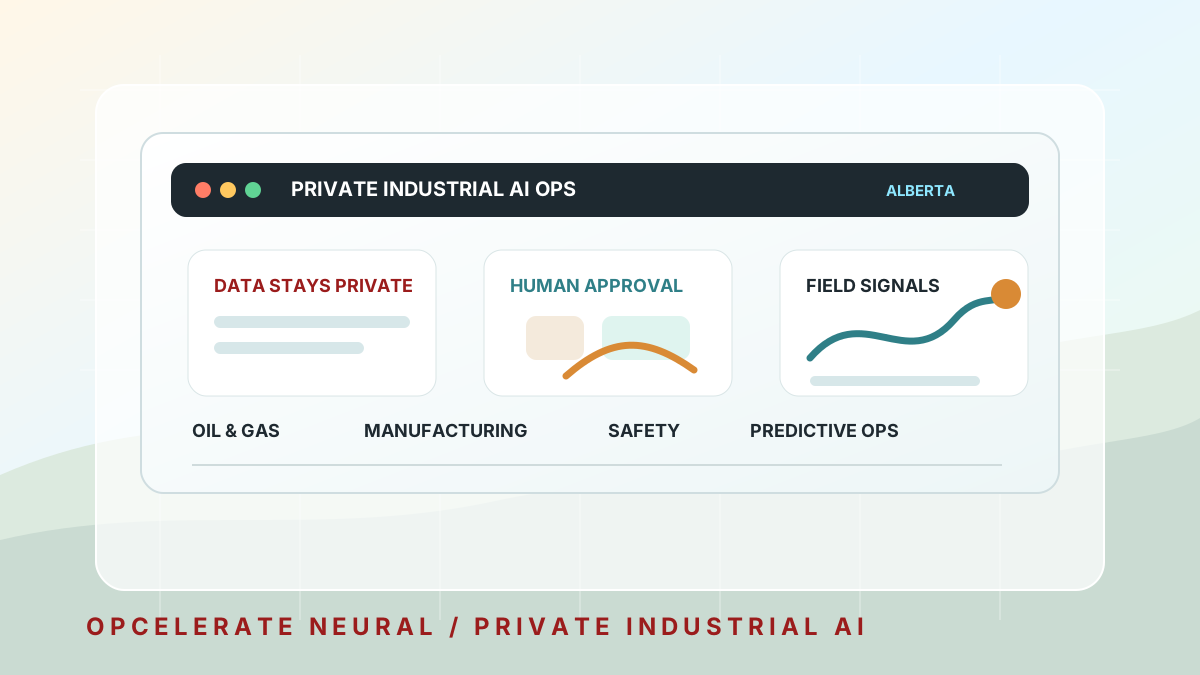
Bright Alberta private industrial AI software dashboard with data control and human approval signals

Quick answer: Alberta operators should buy private industrial AI software only when it protects operational data, keeps humans in approval paths, creates audit trails, and starts with one measurable workflow: maintenance triage, safety review, document automation, computer vision inspection, or production-data analysis.

Industrial AI is not the same purchase as a public chatbot subscription. In oil and gas, manufacturing, construction, energy, logistics, and field service, the system may touch sensitive documents, operational data, camera feeds, maintenance records, and safety workflows. That changes the buying process.

The Opcelerate take is simple: if the work can affect production, safety, compliance, customer trust, or confidential data, the AI system needs a private operating layer before it needs fancy demos.

Private FirstKnow which data can leave the business, which data stays local, and which workflows require on-prem or private cloud deployment.
Human ApprovalAI agents should draft, flag, route, and explain. People should approve high-impact actions before anything changes in the real operation.
Audit TrailEvery recommendation should preserve source files, model outputs, user decisions, timestamps, and the reason an action was accepted or rejected.
One PilotStart with one workflow narrow enough to measure: a queue, a report, an inspection, a document package, or a recurring review task.

What Counts As Private Industrial AI?

Private industrial AI is software that applies AI to operational work while respecting the data boundary. It can include on-prem inference, private model routing, access controls, secure integrations, human review, and dashboards that explain why a task was flagged.

For Alberta teams, useful categories include:

  • AI safety systems: incident summaries, hazard-pattern review, policy search, training evidence, and escalation queues.
  • Maintenance intelligence: work-order triage, downtime analysis, failure-pattern review, and parts or vendor research.
  • Computer vision: quality inspection, visual defect review, site condition checks, inventory counts, and photo-based evidence capture.
  • Document automation: tender packages, compliance binders, permits, reports, SOP drafts, and controlled review workflows.
  • Industrial agents: bounded agents that gather evidence, prepare tasks, check systems, and hand off to staff for approval.

The Buyer Checklist

Before paying for a platform, ask the vendor or implementation partner these questions:

  1. Where does sensitive operational data go, and can the system run privately when required?
  2. Can permissions match our teams, locations, projects, vendors, and approval roles?
  3. Does the system show source notes instead of producing unsupported recommendations?
  4. Can we connect only the systems needed for the pilot, instead of opening everything?
  5. How are model outputs logged, reviewed, corrected, and improved over time?
  6. What happens when the model is uncertain, the source data is stale, or a human rejects the recommendation?
  7. Can the pilot prove value in 30 to 60 days without pretending to automate the whole company?

Where The First Pilot Should Start

The best first pilot is usually not the most dramatic idea. It is the workflow with enough repetition, enough evidence, and enough human pain that a better queue matters immediately.

Good candidates include daily maintenance review, recurring safety paperwork, camera-based inspection triage, engineering document search, tender or procurement review, and field report cleanup. Poor first pilots are vague executive dashboards with no action path.

Private industrial AI wins when it makes one real queue cleaner, faster, and easier to review. The dashboard is secondary. The operating habit is the product.

What Opcelerate Recommends

Opcelerate Neural recommends a staged path for Alberta operators:

  1. Map the workflow: identify the people, systems, files, approvals, risks, and current bottlenecks.
  2. Classify the data: separate public, internal, confidential, operational, safety-sensitive, and regulated information.
  3. Build the first private queue: let AI rank, summarize, and explain; keep people in control.
  4. Measure review quality: track false positives, missed items, time saved, adoption, and operator feedback.
  5. Expand only after trust: add integrations and agent actions after the team trusts the first workflow.

Start With A Private AI Opportunity Scan

We will map five practical industrial AI opportunities across safety, maintenance, documents, vision, operations, or growth, then recommend the safest first pilot.

Book The Scan Explore Industrial AI

Source Notes

These links are provided so buyers can teach themselves the operating context before choosing an AI vendor.