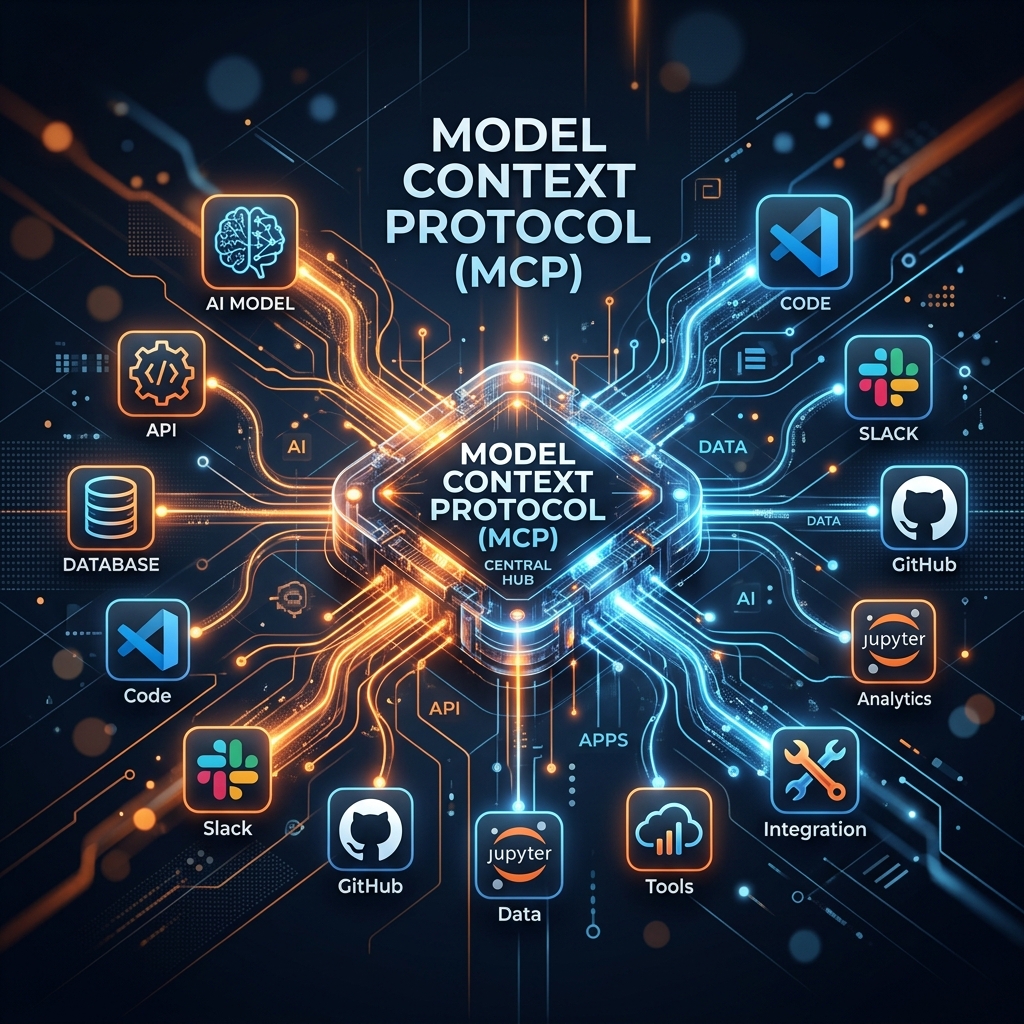
MCP is becoming one of the most important standards in the agentic AI stack because it gives AI applications a common way to discover tools, read resources, and use structured prompts. In plain English: it helps agents connect to the systems where real work happens.
The official MCP architecture describes a client-server model. An AI application acts as the host, creates MCP clients, and connects to MCP servers. Those servers can expose tools, resources, and prompts. Tools can perform actions. Resources can provide context. Prompts can standardize interactions.
The risk is not MCP. The risk is sloppy access.
MCP is a protocol, not a magic security blanket. If a business gives an agent broad access to email, files, CRM, invoices, and production systems without approval gates, the problem is not the protocol. The problem is the deployment design.
That matters because agents are different from dashboards. A dashboard displays information. An agent can decide, request, draft, call tools, update records, and sometimes trigger downstream work. The more useful it becomes, the more governance it needs.
Every agent should have a job description, a tool list, a permission boundary, and a review trail.
A practical checklist
- Start read-only: let the agent observe and draft before it can modify anything.
- Whitelist tools: approve specific systems and functions instead of giving broad access.
- Separate environments: test with sandbox data before connecting production records.
- Log source use: record which resources and tools supported each recommendation.
- Require human approval: add checkpoints for payments, contracts, safety, privacy, and external messages.
- Rotate credentials: avoid permanent keys sitting inside prototypes and demos.
How Canadian businesses should adopt it
The right path is not to avoid connected agents. Connected agents are where the value is. The right path is to build them like operational systems, not like toys. For Alberta companies, that means security design belongs at the start of the project, not after the demo works.
The businesses that get this right will be able to automate more because they can trust the boundaries. That is the funny thing about control: it is what makes autonomy possible.