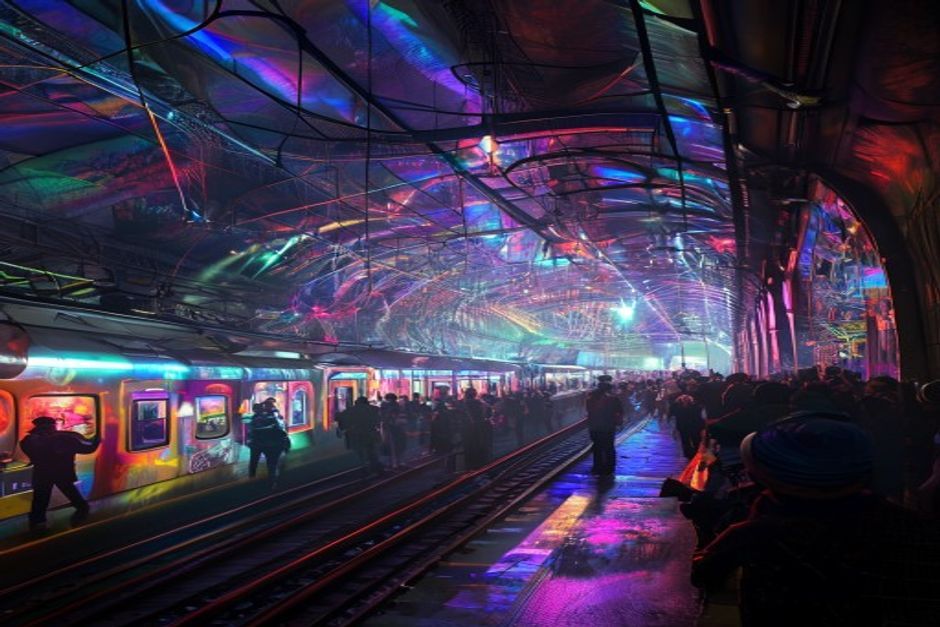
In the cavernous depths beneath Berlin, Buenos Aires, and New York, a cultural renaissance is booming, driven by a blend of raw sound, subterranean acoustics, and cutting-edge augmented reality. Artists and organizers are transforming sprawling, disused transit spaces into immersive, high-impact music venues.
Rather than letting mid-century infrastructure crumble into urban decay, subterranean festival promoters have seized the opportunity. The natural reverb of concrete tunnels provides an acoustic canvas uniquely suited to the heavy basslines and sharp lyricism of underground hip-hop.
What sets these modern festivals apart is their integration of generative visual art. Augmented reality installations project dynamic, audio-reactive graffiti onto the curved walls, ensuring the historic subway tiles aren't physically altered while still providing an explosively colorful backdrop. As performers hit specific lyrical cues, the digital environment responds instantaneously.
Local municipalities, initially skeptical, are beginning to endorse the movement. Organizers report that these events significantly boost local economies. Security is handled natively by the limited ingress and egress points of the stations, and the ticket taxes go directly toward preserving the structural integrity of the surrounding urban grid.
As above-ground venues face noise complains and exorbitant rental costs, the shift to the underground feels less like a trend and more like a permanent evolution of city life. The bass might be underground, but the cultural impact is echoing worldwide.