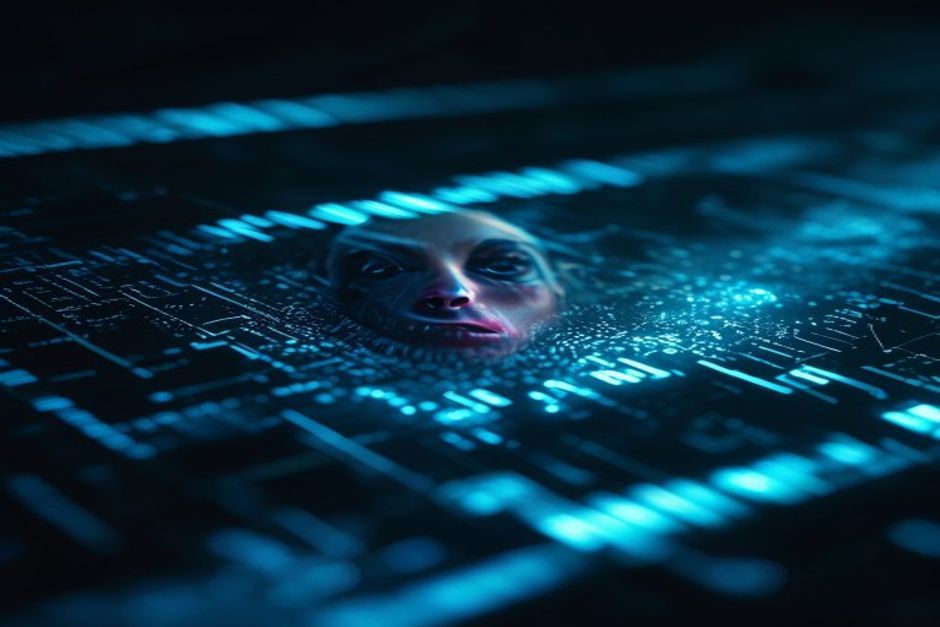
In the dim glow of a midnight screen, an influencer’s smile flickers—eyes wide, voice trembling with an urgency that feels too real. Only a trained eye, or an algorithm, would notice the subtle jitter in the lip sync, the faint ghost of a pixel‑level seam where reality was stitched together. This is the new frontier of manipulation: videos whose deceit is no longer a glaring flaw but an invisible pattern, buried deep in the data, eluding even seasoned fact‑checkers.
What once required a conspicuous mismatch—a shaky background, a misaligned shadow—has become a sophisticated choreography of statistical noise. Researchers at the University of Toronto’s Visual Computing Lab have uncovered that modern generative adversarial networks (GANs) are now being trained on millions of authentic clips, learning not just how faces move but how the fabric of light, grain, and compression behave across devices and codecs. The result is a "semantic camouflage" that mimics the stochastic fingerprints of genuine footage.
These hidden signatures are not random; they follow cryptic mathematical regularities that, until recently, were invisible to the human eye and to conventional detection tools. By mapping the frequency spectrum of pixel variations, scientists can now glimpse the faint echo of the algorithm that birthed the fake. Yet as detection methods improve, so does the next generation of deep‑synthesis engines, which are already being fed adversarial examples to purposefully corrupt those very fingerprints.
The stakes are no longer limited to political satire or celebrity prank videos. In a recent courtroom drama in Vancouver, a forged testimony—crafted from a juror’s own recorded statements—nearly swayed a verdict before a digital forensics team detected an anomalous compression artifact. The incident ignited a cascade of policy proposals, from mandatory blockchain provenance tags for all uploaded video to a national “Deepfake Disclosure Act” that would require explicit labeling of AI‑generated content.
Social platforms, meanwhile, are racing to embed real‑time classifiers into their pipelines, but the latency costs and the sheer volume of uploads mean many deceptive clips slip through the cracks, surfacing in private groups where fact‑checking is a luxury. As AI becomes a utility as ubiquitous as the smartphone, the line between truth and fabrication blurs, urging society to re‑learn the art of skepticism.
In the end, the battle may not be won by better detectors alone, but by a cultural shift that treats every visual claim as provisional, demanding provenance the way we now demand citations in academic work. Until then, the invisible patterns of manipulation will continue to lurk, whispering doubts into the very fabric of our shared reality.