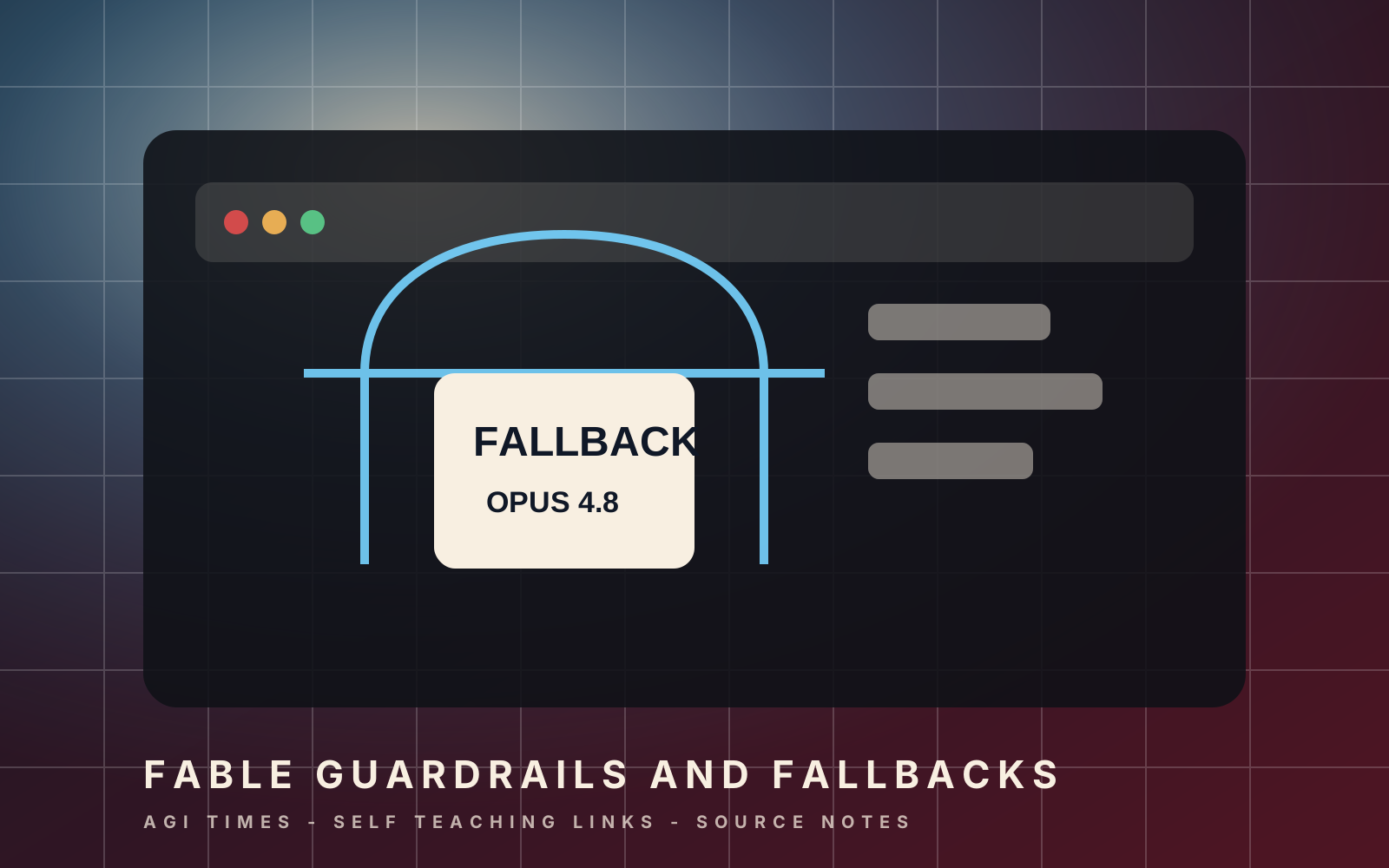
Fable 5 arrives with unusually important product mechanics: safeguards, fallback behaviour, and data retention. This is not fine print. It changes how a business should evaluate the model, how a developer should build around it, and how a team should decide what data belongs inside a prompt.
Why the guardrails matter
Anthropic says Fable is the same underlying capability class as Mythos, but made safe for general use. That safety layer can route certain cybersecurity and biology requests to Opus 4.8. For a user, that may feel like a refusal, a model switch, or a lower-capability answer. For an application, it means the workflow needs explicit fallback handling.
The 30-day retention lesson
Anthropic's Fable product page says using Fable requires 30-day data retention for safety monitoring. That does not mean every business must avoid it, but it does mean teams should classify data before use. Public training examples, draft code, and synthetic documents are different from client secrets, health information, credentials, or private contracts.
The Opcelerate take
Fable should be taught as a governed tool, not just a more powerful model. Before using it for business work, create a simple policy: approved data, blocked data, who can use it, when fallback is acceptable, how outputs are reviewed, and what must be logged.
Teach Yourself: Start Here
- Read Fable safeguards - Start with Anthropic's own description of safeguards and data retention.
- Study API fallback handling - Teach yourself how refusals, fallbacks, and billing work before integrating.
- Compare public reporting - Learn how false positives can affect ordinary questions.
- Review the model launch - Understand why Anthropic says the safeguards exist.