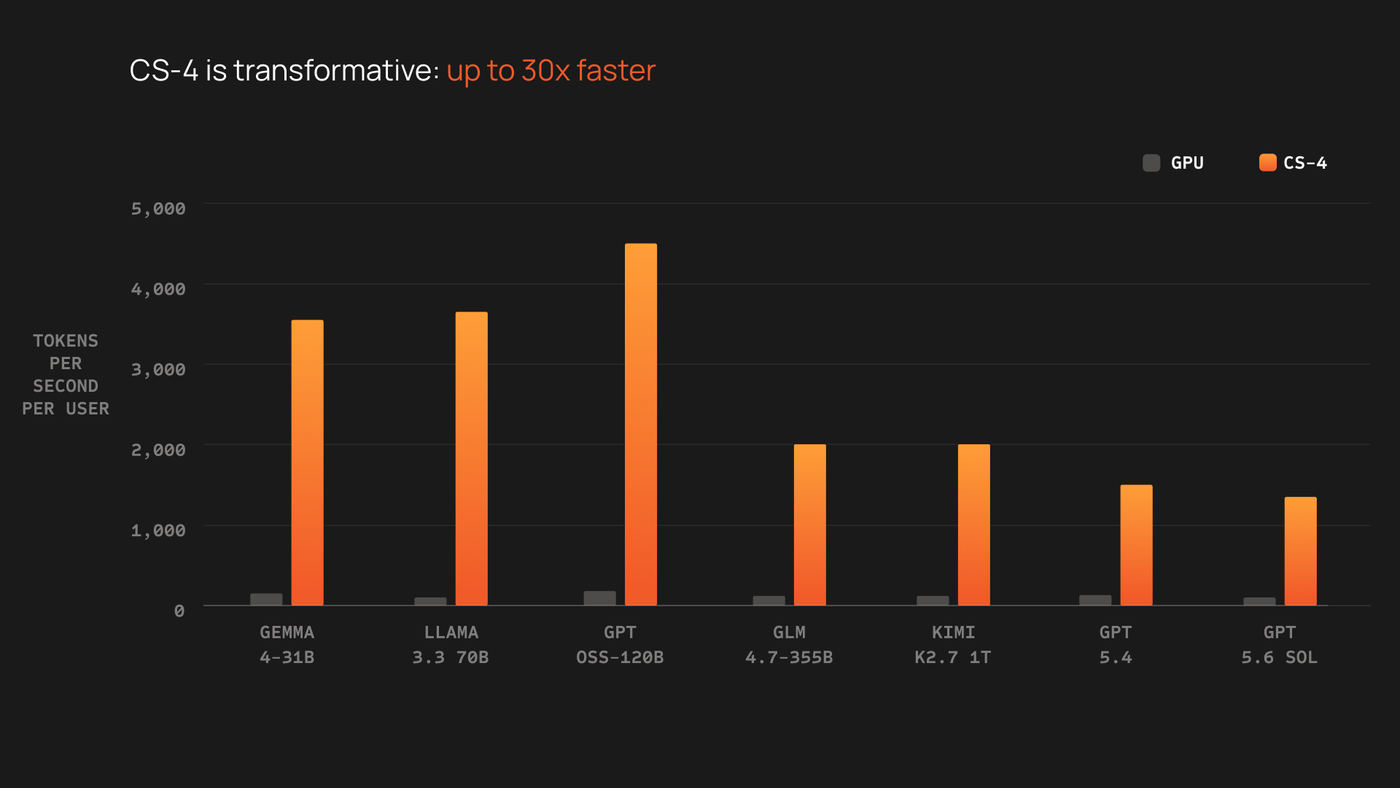
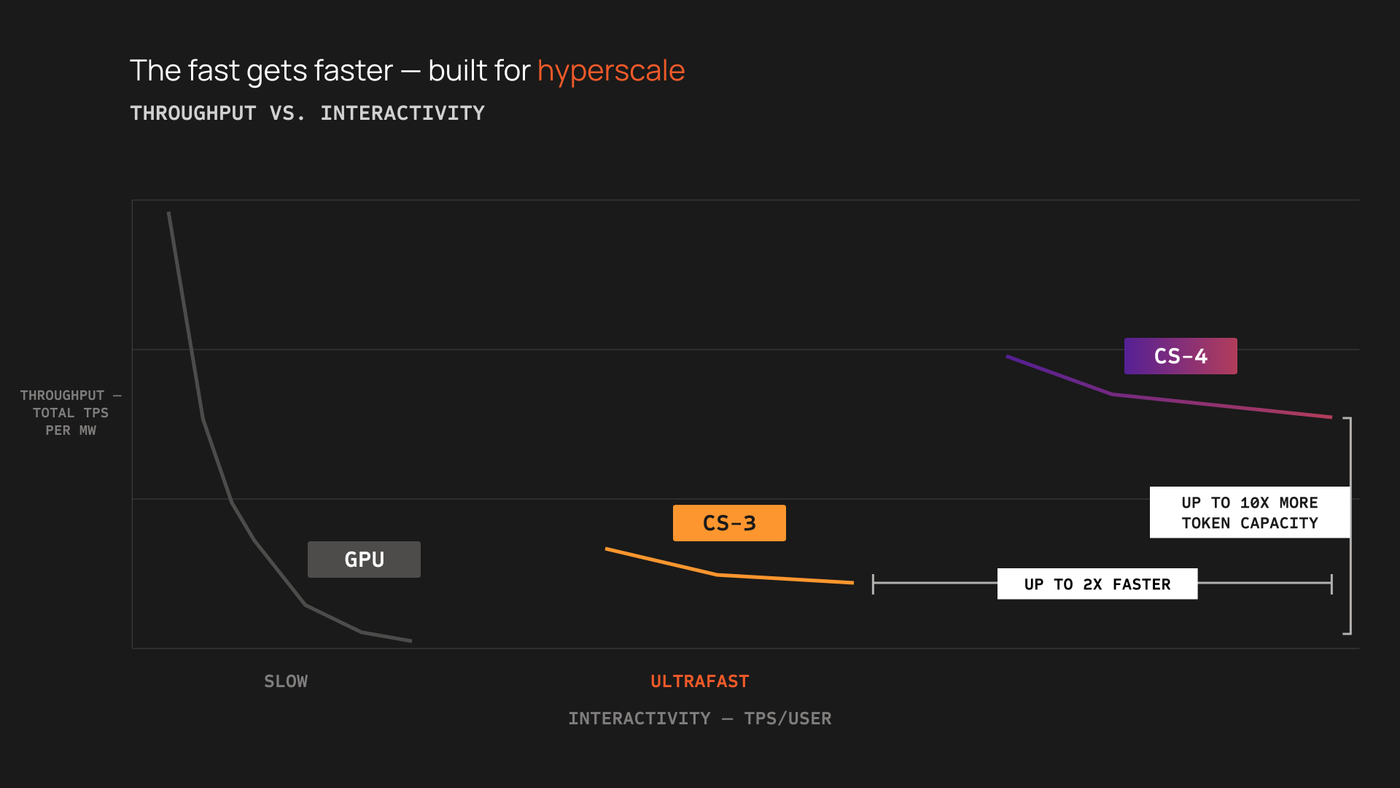
Cerebras Systems (NASDAQ: CBRS) introduced the CS-4 on August 18, 2026. The company calls it a rack-scale accelerator built from three Wafer Scale Engine 3 Turbo chips. Official posts and the product page say up to 30 times faster inference than GPUs, up to 10 times more throughput per watt than CS-3, and 50 percent fewer components in the new backpack assembly.
What Cerebras actually claimed
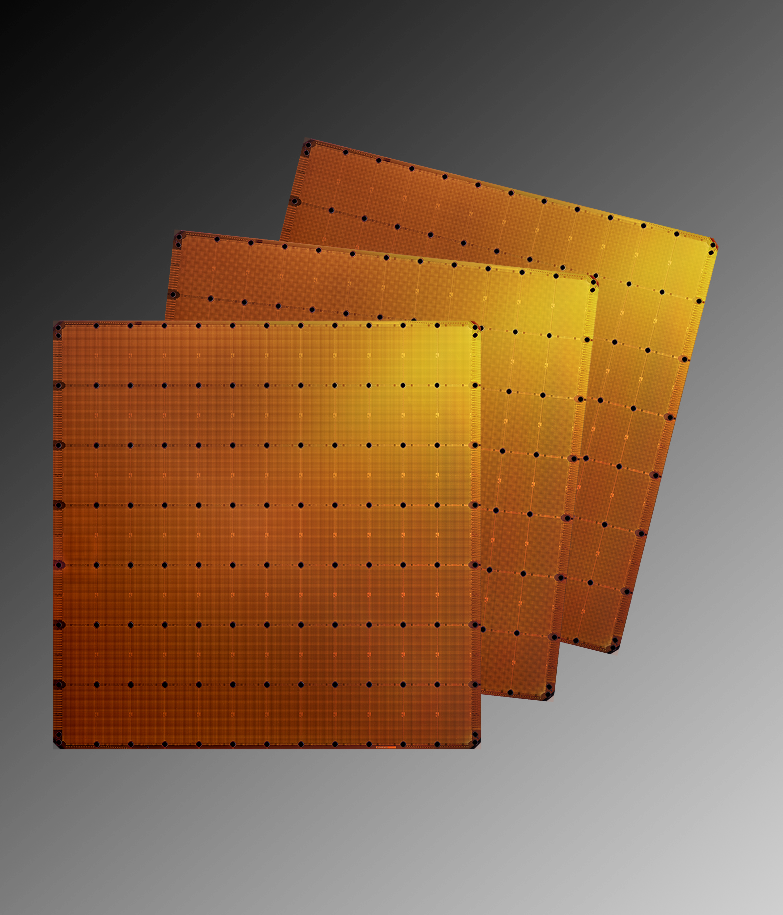
The CS-4 is a full rack, not a single GPU board. The press release says it uses three WSE-3 Turbo wafers. Published rack numbers: 750 petaflops of AI compute, 129.6 petabytes per second of memory bandwidth, 7.2 terabits per second of I/O, and wafer-to-wafer latency as low as two microseconds.
In AI, speed is productivity. Historically, fast inference meant using smaller and less capable models. Cerebras CS-4 delivers industry-leading speeds on the largest frontier models.Andrew Feldman, CEO and co-founder, Cerebras. GlobeNewswire, August 18, 2026.
On GPT-OSS-120B, with identical prompts, Cerebras reports more than 4,400 tokens per second per user. That is the number behind the "up to 30 times faster than GPU solutions" line. Treat it as Cerebras's lab comparison, not as a speed you will see on a Sherwood Park Mac Mini.
Being 30 times faster doesn't just make a response feel fast. It gives an agentic system room for more than an order of magnitude as much reasoning, verification, or tool use in the same wall-clock time.Sean Lie, CTO and co-founder, Cerebras. GlobeNewswire, August 18, 2026.
Each WSE-3 Turbo is still a 4 trillion transistor wafer with 900,000 AI cores and 44 GB of on-wafer SRAM. Cerebras says the Turbo version doubles compute to 250 petaflops per wafer and doubles memory bandwidth to 43.2 petabytes per second versus the prior WSE-3. The product page also says CS-4 can deliver more than 1,000 tokens per second on models larger than 10 trillion parameters.
| Metric | CS-3 (one wafer) | CS-4 (three wafers) |
|---|---|---|
| AI compute | 125 PFLOPS | 750 PFLOPS |
| Memory bandwidth | 21.6 PB/s | 129.6 PB/s |
| On-chip fabric bandwidth | 26.7 PB/s | 160.5 PB/s |
| System I/O bandwidth | 1.2 Tbit/s | 7.2 Tbit/s |
| I/O latency | 5 microseconds | 2 microseconds |
Numbers from the Cerebras investor release. CS-3 is listed as one wafer. CS-4 is listed as three wafers.
The backpack is the other headline
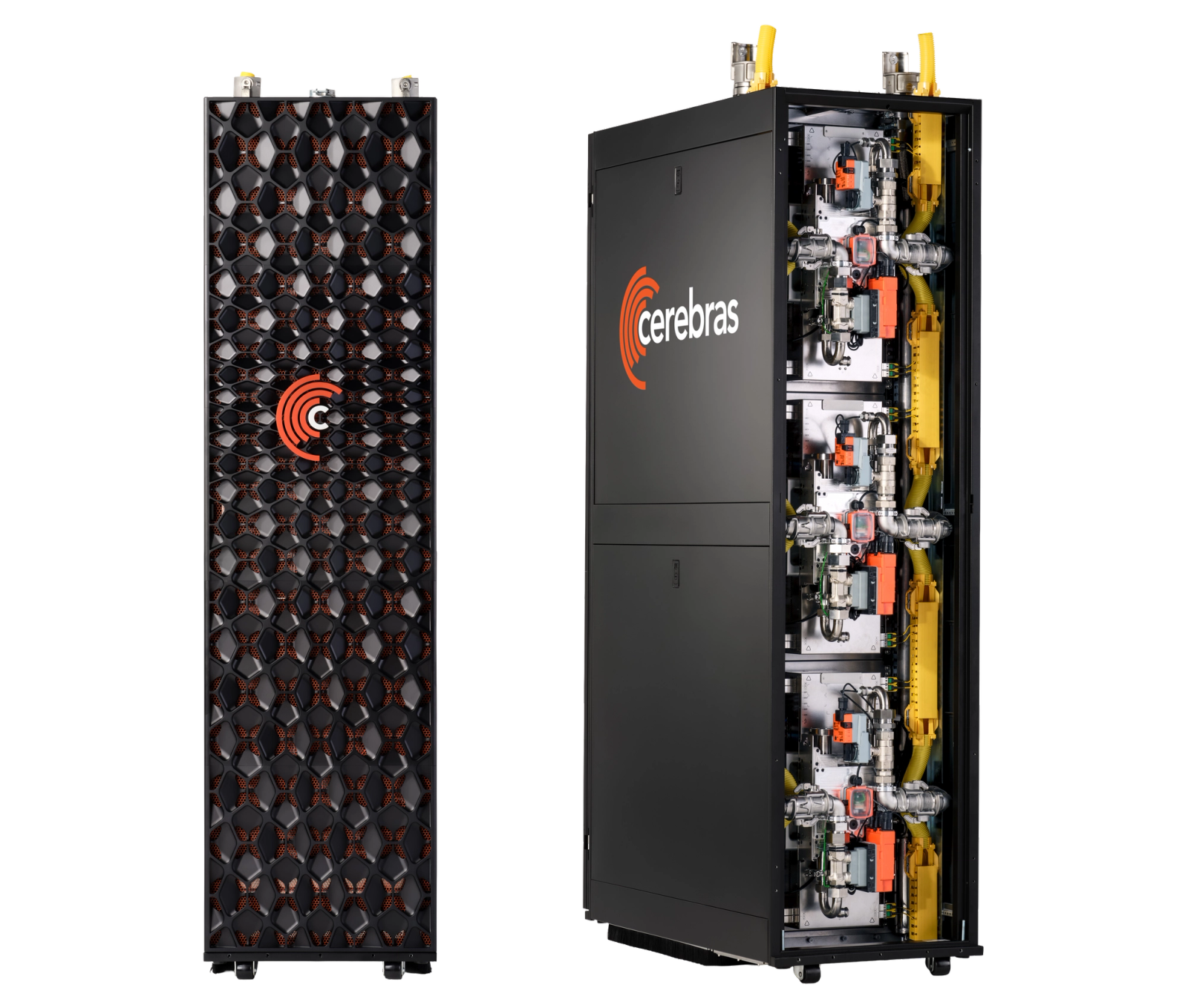
CS-4 is the first machine on Cerebras's Nexus rack-scale platform: compute, power, and I/O as separate modules. The Wafer-Scale Backpack folds the wafer, power conversion, direct liquid cooling, I/O, and control electronics into one rear-mounted package. Cerebras says that cuts components by 50 percent versus the prior system, uses 60 percent more automated manufacturing, and shortens deployment from days to hours.
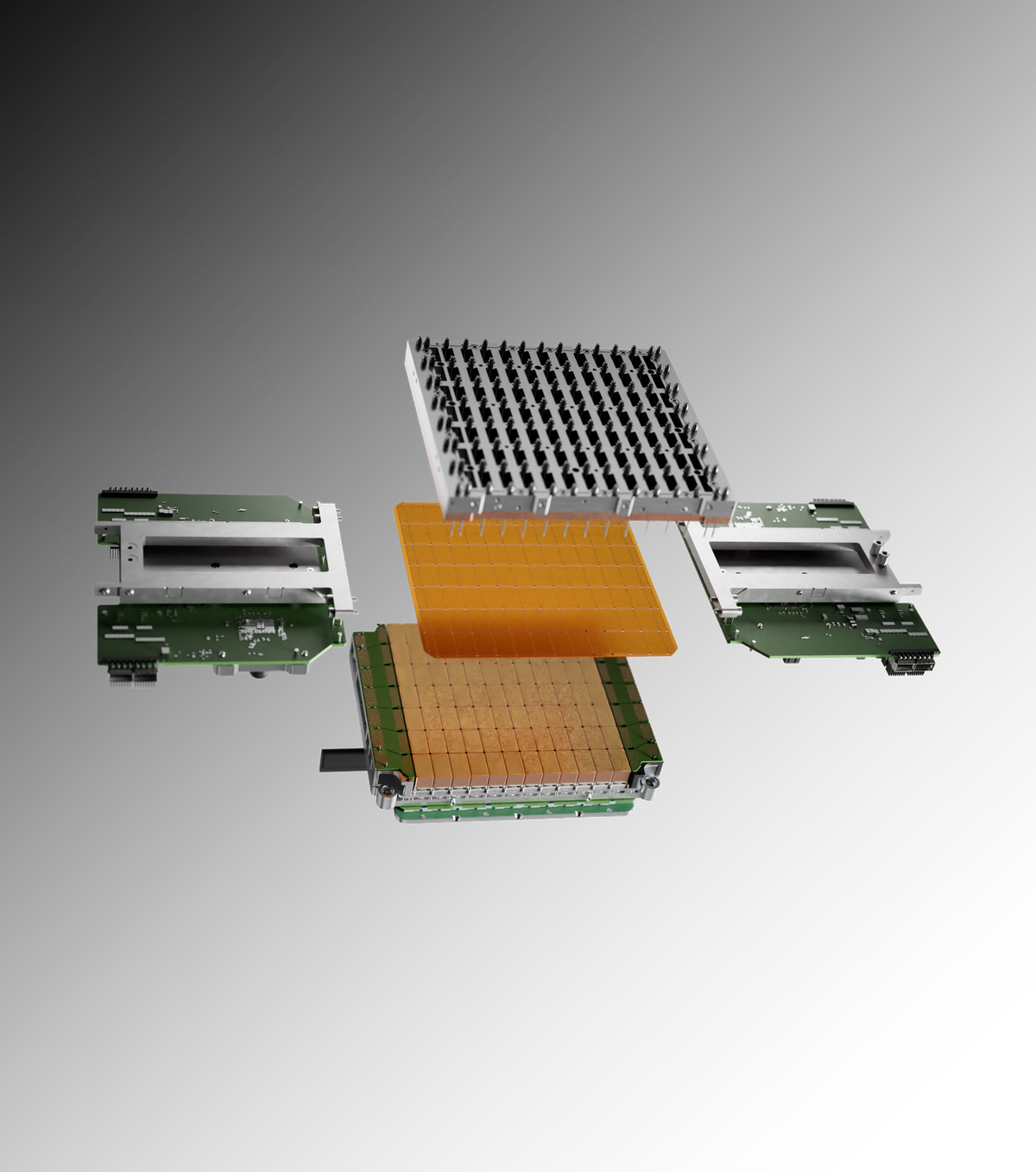
Power conversion sits about 0.5 millimeters from the processor, versus about 50 millimeters on a conventional GPU board. The company says that nearly eliminates board-level power loss and lets it feed twice as much power into the WSE-3T so clocks can run higher.
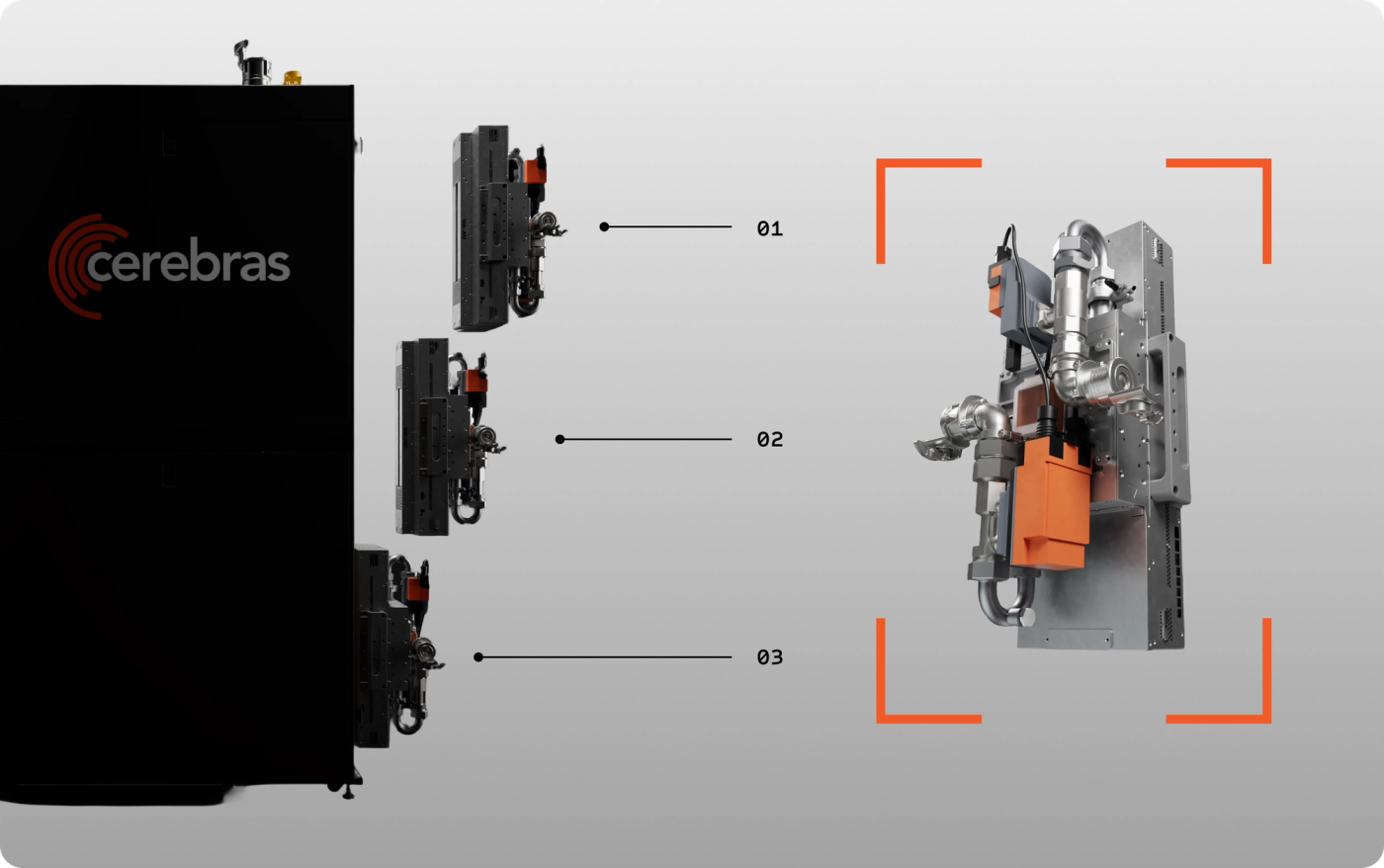
Direct Wafer Links can connect wafers inside and across racks without a switch. Cerebras says that two-microsecond path is what lets it talk about models above 50 trillion parameters and about mixed setups with partners such as AMD Helios and AWS Trainium. Those partner paths are described as future ecosystem work, not as a Canadian shop SKU.
What a local operator should do
You will not install a CS-4 in a Strathcona County office. You might feel it if OpenAI Ultrafast, a cloud inference API, or a voice agent starts answering in a fraction of a second instead of stalling. Speed helps after-hours intake. It does not own the hard call.
Do not rewrite your stack because a wafer rack got faster. Ask your vendor whether the model you already pay for will run on this class of inference, what the token price is, and whether the data stays in a Canadian-reviewable path. If the job is a missed-call note, a quote draft, or a tender summary, keep a human on the output.
- If you buy cloud inference, ask whether the endpoint is Cerebras-backed and what happens when the queue fills.
- If you run local models, CS-4 is not a replacement for a private Mac Mini or GPU box. It is a reminder that latency is now a product feature.
- If you sell voice or receptionist automation, test the same script at two speeds. Faster is only useful if the handoff rules still fire.