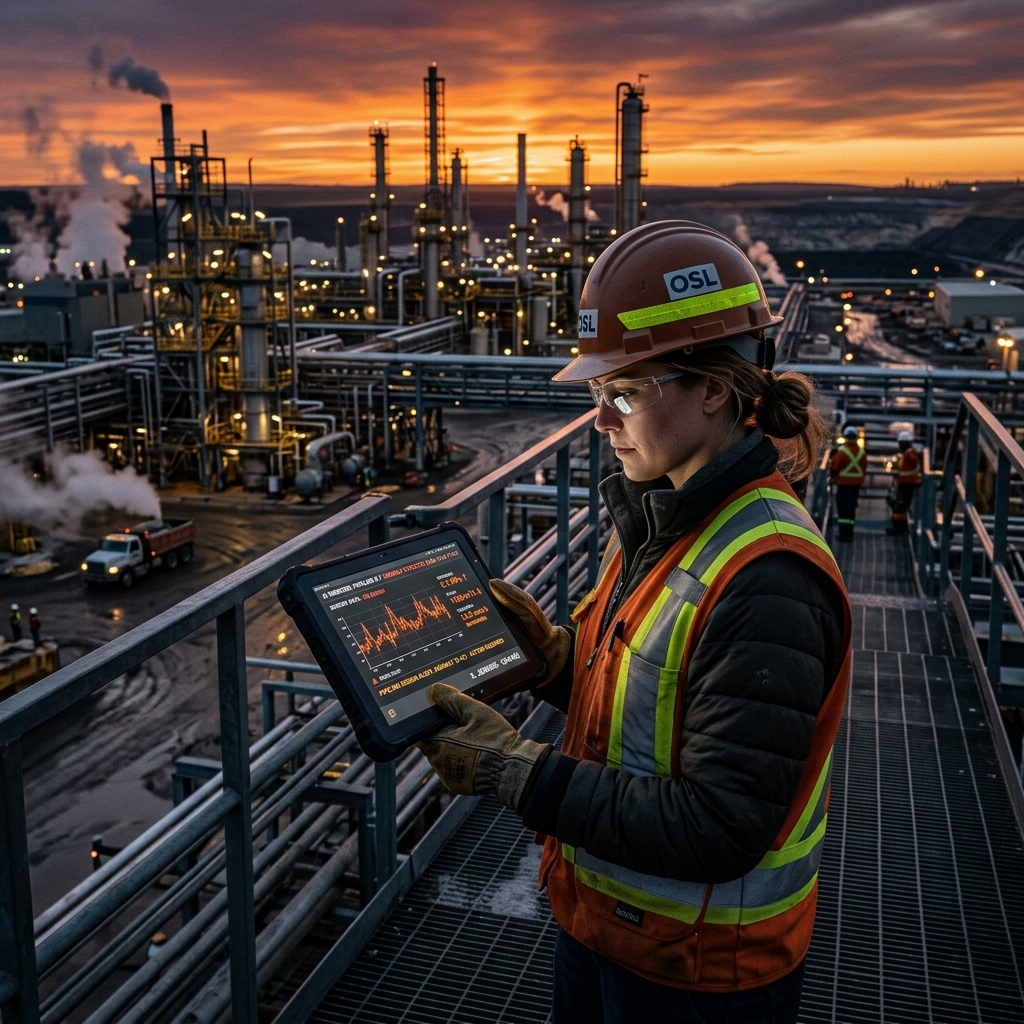
A process engineer at a major Alberta oil sands operation spotted something unusual one morning in February—not in the field, but on a dashboard. An AI monitoring system she had championed installing six months earlier had flagged a pressure variance pattern in a 40-kilometre pipeline segment. The anomaly was subtle, completely invisible to standard threshold-based SCADA alarms. The AI said there was a 91% probability of a critical seal failure within 72 hours.
She brought the finding to her operations lead. They debated it for two hours. The sensors were reading normal. Nothing looked wrong. In the end, they authorized a controlled shutdown for inspection. Engineers found a micro-fracture in a weld joint that, left unchecked, would have ruptured under the following week's scheduled pressure surge.
The potential cost of an uncontrolled rupture—lost production, environmental remediation, regulatory fines, and reputational damage—was conservatively estimated at $40 million. The cost of the AI subscription that flagged it: under $3,000 per month.
This is the quiet revolution happening in Alberta's oil patch. While the public debate about AI focuses on chatbots and white-collar automation, agentic AI is being deployed deep inside the industrial infrastructure of Canada's most capital-intensive sector—and it is delivering returns that make every other technology investment look incremental.
— Industry consultant, Calgary
For operators still relying solely on human inspection schedules and threshold-based alerting, the risk calculus is shifting rapidly. The AI doesn't get tired on a 12-hour shift. It doesn't dismiss a subtle pattern because it saw a similar one last month that turned out to be nothing. It processes every sensor reading against thousands of historical failure signatures, continuously, with no degradation in attention.