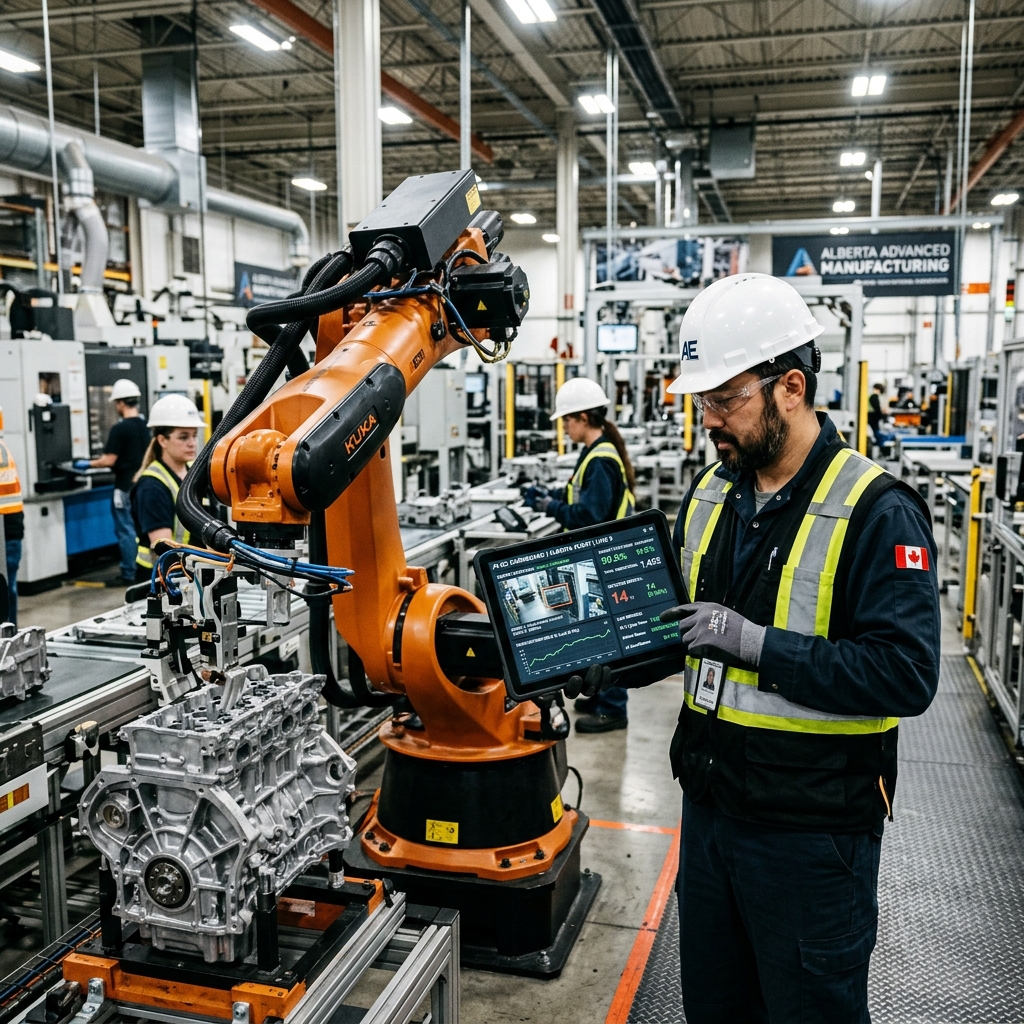
For 11 years, a precision parts manufacturer in Nisku, Alberta ran its quality control line the same way: three inspectors per shift, eyeballing components on a conveyor at 120 parts per minute. Their defect escape rate—the percentage of faulty parts that slipped past inspection and reached customers—sat at a stubborn 2.3%. Industry average. Acceptable. Until it wasn't.
A single bad batch of hydraulic fittings shipped to a major oil sands client in Q3 of last year cost the company $380,000 in recalls, re-inspection, expedited replacements, and, worst of all, a formal supplier performance review that nearly ended a $4.2M annual contract. The plant manager made a decision that week. By January, an AI vision inspection system was running on Line 3.
The system uses high-speed cameras mounted above the conveyor, processing every part against a trained model built from 40,000 images of both conforming and defective components. It flags anomalies in 4 milliseconds—faster than the part can travel 2 centimetres down the line. In the first 90 days, the defect escape rate dropped from 2.3% to 0.76%. By day 120, it was at 0.74% and still declining as the model continued to learn.
The financial math is stark. At their production volume, a 1.56 percentage point reduction in escaped defects represents $1.2 million per year in avoided recall costs, client penalties, and warranty claims. The system cost $87,000 to implement and $14,000 per year to maintain.
Line 4 goes live next month. Lines 1 and 2 are scheduled for Q3. The plant manager is now presenting the ROI model to their sister facility in Red Deer.