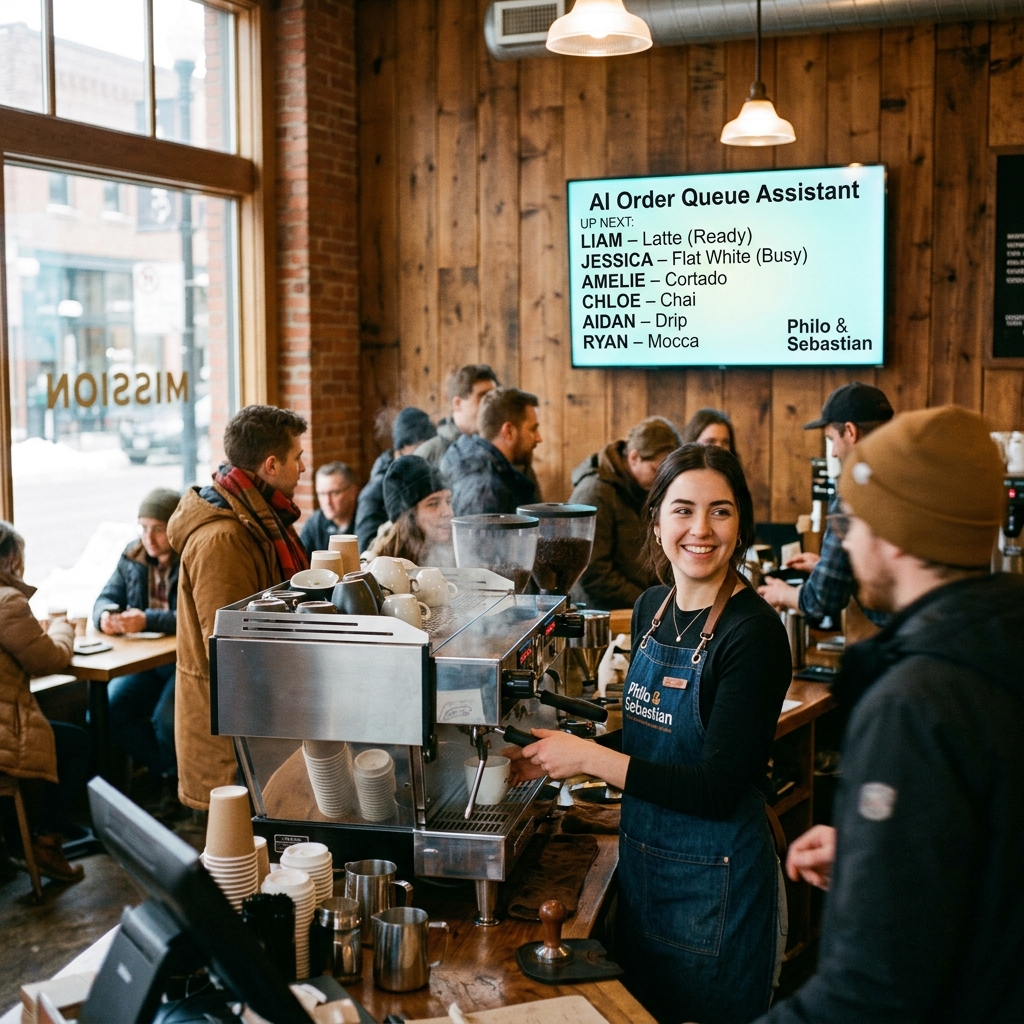
The first thing you notice walking into Pearl & Dust, a small café in Calgary's Mission district, is that the morning rush no longer feels like a rush. There is no line snaking out the door at 7:45 a.m. on a Thursday. The baristas are not shouting names. There is, instead, a calm, almost ceremonial pace — drinks coming up, customers calling out "thanks, Mara!" to a screen behind the counter as they leave.
"Mara" is not a person. Mara is the café's AI ordering agent — installed in early February, trained on six months of order data, and now, by the owner's count, the most popular employee on the morning shift.
— Idris Halevi, owner of Pearl & Dust
Mara handles the café's mobile-order intake, runs natural-language modifications ("oat milk but only half, and can you make it slightly less hot than usual"), routes the order to whichever barista is best-suited based on real-time queue depth, and generates the cup label. The result, according to Halevi's data: average wait time at peak fell from 7.4 minutes to 4.4 minutes — a 41% drop — while average ticket size went up 6% as Mara learned which upsells each regular actually wanted.
What surprised Halevi was not the speed or the revenue. It was the customer reaction. Within two weeks of launch, Mara had a small but vocal fan club — regulars who would tell first-time visitors to "try saying it the way you would say it to a person, she'll figure it out." A retired professor began bringing the café handwritten thank-you notes addressed to the screen.
The hospitality sector — long considered the hardest place to deploy AI without breaking the customer experience — is reporting some of the fastest adoption gains in Canada. Restaurants Canada's spring index found that 19% of independent food-service operators now run some form of AI customer-facing tool, with average customer satisfaction scores at AI-equipped venues running slightly higher than non-equipped peers.
Halevi has not let any staff go. He has, however, changed what they do. His baristas now spend more time on quality and conversation. The café added a small bookshelf in March, a rotating local art wall in April, and is exploring a second location in Inglewood. Halevi credits Mara with giving him back the time to think about any of those things.
"She is a tool," he said, watching her cheerfully handle a 14-item office order at 9:02 a.m. on a Thursday. "But she is also part of the place now. Take her away and the regulars would notice. That tells you something."